
What It Actually Is
Understanding lab grown meat starts with the basics: how it’s made, how it differs from other meat alternatives, and what the various terms actually mean.
How Lab Grown Meat Is Made
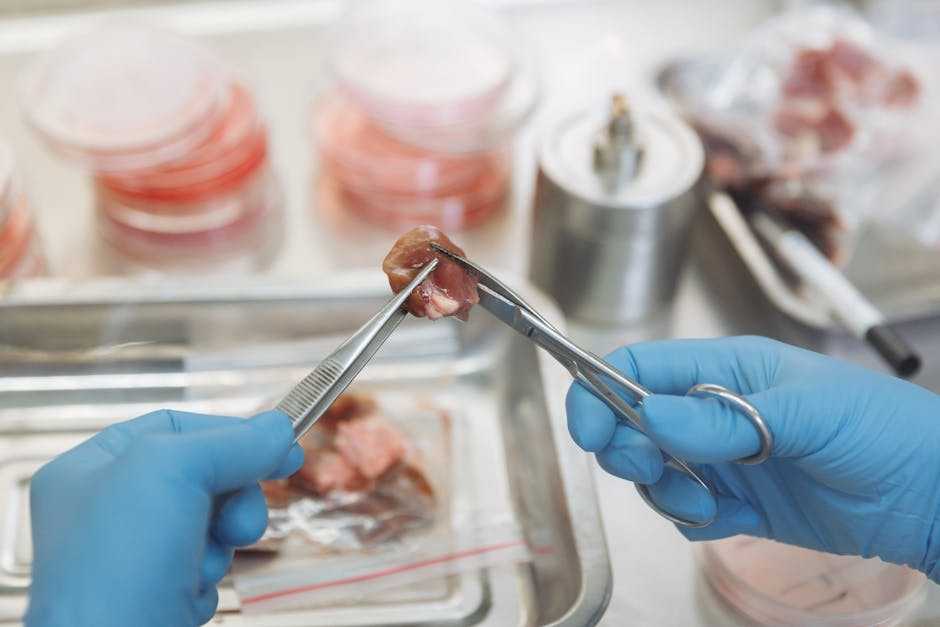
Lab grown meat, also referred to as cultivated or cell based meat, is produced through a process that grows real animal cells in a controlled environment without raising or slaughtering an animal.
A small sample of animal cells is collected, often through a painless biopsy.
These cells are placed in a nutrient rich culture medium that mimics the conditions inside an animal’s body.
The cells multiply and develop into muscle tissue essentially becoming meat.
Over time, the tissue is harvested, processed, and prepared for consumption.
The result is real meat with the same biological properties as conventional meat, but without the environmental and ethical concerns of traditional livestock farming.
Lab Grown vs. Plant Based vs. Conventional Meat
It’s important to distinguish between these three:
Lab grown (cultivated) meat: Made from actual animal cells; real meat, not plant based.
Plant based meat: Made from ingredients like soy, peas, or mushrooms and designed to mimic meat’s texture and taste; entirely vegan.
Conventional meat: Derived from animals raised and slaughtered for food.
Each option has different implications for health, sustainability, and consumer preference.
Key Terms to Know
As the industry grows, consumers will encounter several industry specific terms. Here are a few commonly used ones:
Cultivated meat: The term now widely adopted by the industry and regulators to describe lab grown meat.
Cell based meat: An earlier term that also refers to the process of growing meat from animal cells.
Clean meat: A marketing term favored in early discussions to highlight the reduced contamination risk compared to traditional meat production.
Knowing these terms helps consumers better understand labels and product claims as the technology enters the mainstream market.
Why It Matters
Lab grown meat isn’t just about novelty it’s a potential shift in how we feed people and take care of the planet.
First, the environmental upside. Traditional meat production chews up a ton of land and water, and it’s a heavyweight when it comes to greenhouse gas emissions. Cultivated meat skips the pasture and the slaughterhouse. Cells grow in controlled tanks, not open fields, and that slashes the need for space and resources. Water use goes down. Emissions go down. The footprint, overall, is leaner.
Then there’s animal welfare. No factory farms. No cramped cages. Lab grown meat is made without raising or killing animals. For folks who care about ethics but still want the real taste, this is the middle ground.
Finally, safety matters. Because cultivated meat is made in sterile, monitored environments, there’s more control over contamination, antibiotics, and pathogens. Less guesswork, fewer recalls.
It’s not a perfect system yet but the potential is real. For a closer look, check out lab grown meat benefits.
Is It Safe to Eat?
This is the big question for most people and rightfully so. On paper, lab grown meat is produced in sterile, tightly regulated environments. But food isn’t just about lab specs; it’s about trust.
Globally, food safety agencies are starting to weigh in. Singapore led the charge back in 2020, approving cultivated chicken for sale. That decision didn’t come lightly. It followed strict testing and layers of reviews on everything from cell sourcing to final product quality. In 2023, the U.S. followed suit, with the FDA and USDA jointly approving two cultivated chicken products, giving them the green light for commercial sale. These weren’t rubber stamped approvals they included detailed safety assessments and ongoing oversight.
What’s becoming clear is this: as regulators catch up with the science, they’re demanding transparency. Companies must show how they grow cells, what they feed them, and how they ensure consistency batch to batch. It’s not just about ticking boxes it’s about proving the entire system is built for safety.
For consumers, that’s actually a good thing. More scrutiny means fewer unknowns. Expect stricter labeling ahead and published production data to become the norm, not the exception.
The Taste & Texture Factor

Lab grown meat may be engineered in high tech bioreactors, but for most consumers, what really matters is the eating experience. So how does it actually taste? And how close is it to the real thing?
What Early Adopters Are Saying
While lab grown meat isn’t yet available to the everyday shopper, early taste testers often chefs, journalists, and product developers have shared generally positive impressions:
Texture is surprisingly close to conventional meat, especially in ground or patty forms.
Flavor profiles vary depending on the type of meat (chicken, beef, etc.) and the specific production method.
Some report a “cleaner” aftertaste, with fewer fatty or gamey notes.
Key Differences in Taste
While lab grown meat is made from real animal cells, it doesn’t always come with the exact flavor nuances of traditional cuts. Why?
Fat content and structure can differ, depending on whether fat cells are also cultivated.
Flavor compounds that come from muscles working over an animal’s lifetime may be less pronounced.
Cooking behavior (browning, moisture retention) can also influence perception.
In general, it’s not that lab grown meat tastes artificial it’s that it tastes familiar, but not identical. And that’s part of the challenge.
How Food Tech Is Closing the Gap
A key goal of food tech companies is to make lab grown meat not just comparable to traditional meat, but better in some ways. That means investing in:
Scaffold structures that mimic the fibrous arrangements of animal muscles, enhancing chew and mouthfeel.
Cell fat integration, which can dramatically boost richness and flavor depth.
Bioreactor innovations, allowing for more precise control over texture and cellular development.
As the industry evolves, expect continual improvements even personalized flavor enhancements. Consumers aren’t just getting an imitation of meat they may be getting a more optimized version of it.
What It Costs And Why
Right now, lab grown meat is still pricier than the stuff you find in your grocery store. That’s not because it’s inherently expensive, but because it’s early. Most cultivated meat is being made in limited batches, using small scale production facilities and highly specialized equipment. Think biotech lab, not bustling food factory.
The good news: costs are dropping. As companies move from petri dishes to bioreactors the size of shipping containers, the technology scales. Processes become more efficient, employee expertise builds, and new production hubs lower per unit costs. Better automation and supply chain maturity are kicking in and fast.
Meanwhile, investment is pouring in. Governments and private investors are betting big on lab grown meat to answer food security and sustainability needs. Much of this funding is going into R&D improving the growth media, cutting energy use, and automating the process. In the next few years, many expect production costs to fall enough for cultivated meat to hit price parity with premium cuts of traditional meat. The tipping point is coming it’s just a matter of infrastructure catching up to innovation.
Where to Find It Today
Cultivated meat is no longer just a lab experiment it’s making its way onto real menus and store shelves, albeit in small doses. Here’s a look at where consumers can currently experience lab grown meat and which regions are leading the charge.
Restaurants and Brands Offering Cultivated Meat
A growing number of innovative restaurants and food companies are introducing select cultivated meat products to early adopters. These establishments often work in partnership with startups and biotech firms to promote awareness and gather real world feedback.
Good Meat: Partnered with select restaurants in Singapore to serve cultivated chicken, marking the world’s first commercial launch of lab grown meat.
Upside Foods: Approved for sale in the U.S., Upside Foods has announced plans to launch with culinary partners in select fine dining restaurants.
Eat Just: One of the earlier trailblazers, operating under the GOOD Meat division, it continues to innovate and expand its reach.
Pilot Launches in Retail
While widespread grocery availability is still on the horizon, initial pilot programs are testing consumer interest and pricing models.
Limited offerings of cultivated chicken in Singapore’s high end retailers.
Plans in motion for test availability in U.S. specialty grocers by companies like Believer Meats and Aleph Farms.
Some startups are collaborating with foodservice distributors to test product rollouts in institutional settings (e.g., universities, hotels).
Industry Leaders by Region
Several countries have taken early leadership roles in embracing, regulating, and promoting lab grown meat innovation.
United States: Home to major companies like Upside Foods and Eat Just. The U.S. was one of the first countries to approve cultivated meat for public sale.
Israel: A global hub for food tech, with companies like Aleph Farms and Future Meat Technologies leading in R&D and pilot production.
Singapore: The first country to authorize the sale of cultivated meat in 2020, now functioning as a testbed for market adoption and regulatory frameworks.
Cultivated meat is still in its early access phase, but these partnerships and pilot programs are paving the way for broader adoption in the near future.
What Still Needs to Happen
For lab grown meat to break out of its novelty phase and into everyday meals, it needs more than science it needs trust. Right now, most consumers are still skeptical or confused. Is it safe? Is it real meat? Does it come from a lab or a factory? These kinds of questions slow down mainstream adoption. Building awareness means clear, honest education from producers, regulators, and retailers alike.
Labeling is another piece of the trust puzzle. The industry doesn’t yet have universal standards for what goes on the package. Some say “cultivated meat,” others say “cell based.” Until that language is consistent and easily understood, confusion will continue. People need to know what they’re buying and feel confident about what’s in it.
Then there’s the regulatory side. While countries like Singapore and the U.S. are starting to greenlight cultivated meat, the rest of the world is lagging. Global approvals need to move faster and with more coordination. Without them, lab grown meat stays stuck in limited markets and pilot menus.
The potential is real. But mass adoption won’t come from hype or headlines. It’ll come from clarity, transparency, and real world availability. The playbook now is less about the lab and more about the label.
(More details: lab grown meat benefits)































































































































































































































































































































































































































































































































































































































































































































































































































































































































































































































































































































































































































 Kennethony McKenna played a vital role in helping build Food Smart Base, contributing his expertise and dedication to the project’s development. His efforts supported the platform’s growth into a reliable source of food news, nutritional advice, and culinary insights, ensuring that it serves readers with both accuracy and value.