
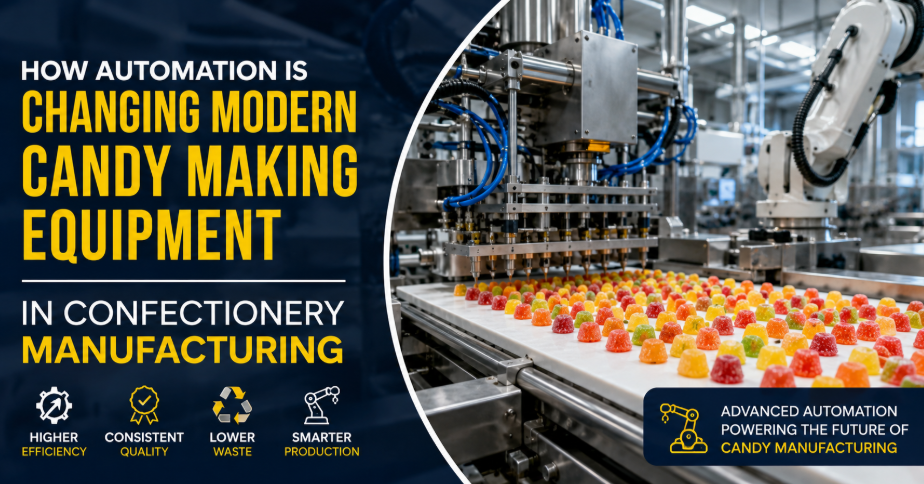
The confectionery business is changing at a rapid pace. The new flavours, unique feel, and quality sweets consumer demand have caused changes to take place, whereby manufacturers have been compelled to re-evaluate their old production processes. To keep in pace with market demands, some companies are implementing the latest technologies that improve efficiency and reliability in everything they practice. The new candy making equipment has now become an important aspect of this change enabling producers to make more and retain the quality levels that buyers demand. Automation ceases to be the prerogative of large-scale manufacturers. It has turned out to be an indispensable aid to confectionery businesses with the aim of remaining competitive, minimizing the cost of production, and reacting promptly to emerging trends in the market.
Why Traditional Candy Production Faces New Challenges
The manufacturing of candy has never been in need of precision. The slight variations in cooking temperatures, measurements of ingredients, or cooling periods may influence the end product. Although manual processes can handle small-scale production, they can occasionally prove to be unable to cope with the demands of contemporary manufacturing.
In the current days, consumers have come to demand uniformity in all buying transactions. They either buy either a hard candy, gummy sweet, or one that has been covered with chocolate, but they want the same taste and experience. In the meantime, manufacturers will be forced to address the strain on labour costs and cost, raised food safety, and a growing pressure to be more efficient in manufacture. These issues have promoted the use of automation in the industry.
Automated Ingredient Handling Improves Accuracy
Ingredient handling can be considered one of the initial fields where automation can add value. Traditional production settings may involve manual measurement and transfer of ingredients, which may enhance chances of mistakes. Any minor changes can affect the quality of products and introduce unjustified waste.
Automation aids in making sure that the ingredients are measured and dispensed with a high degree of precision. The higher-order controls scan quantities at any given time, minimizing the chances of anomalies between batches. This degree of accuracy is especially crucial to manufacturers who produce copious amounts of confectionery products, where consistency determines customer satisfaction and brand name.
Smarter Cooking Systems Create Better Results
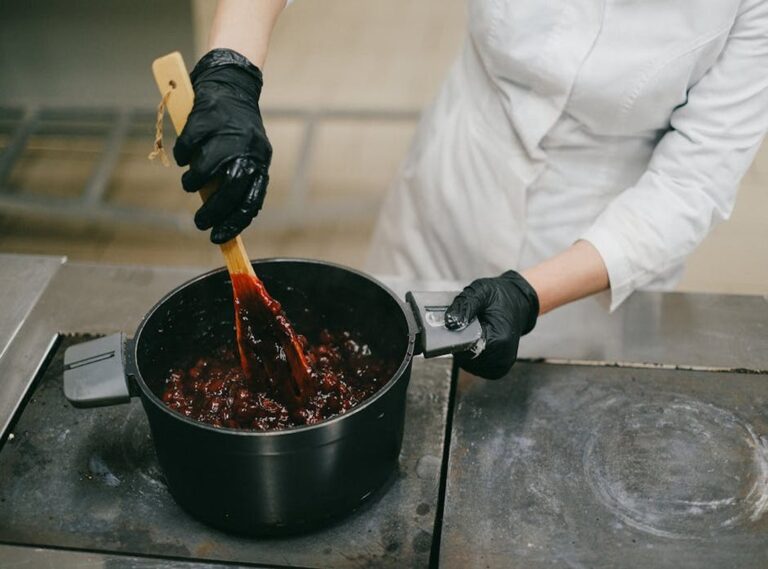
One of the most crucial processes in producing candies is cooking. The temperature and time taken in cooking should also be taken care of so that the desired texture, taste and look are achieved. Manual monitoring could not be easy at all especially when the volumes of production are high.
Advanced automated cooking equipment tracks conditions of the processing and automatically adjusts them when necessary. This helps in maintenance of the best cooking conditions in the manufacturing process. As a result of this it will enable the manufacturers to reduce the defects in the products, increase the consistency of the products and the possibilities of over cooking a batch of products or under cooking it. Better quality products and increased efficiency in the operations are the ultimate results of better process control.
Increased Production Speed Without Sacrificing Quality
The biggest advantage of automation is that it is possible to make the product more and keep the cost at the same as this does not lose the quality of the product. Repetitive work can be done by automated production lines at a much faster rate as compared to manual work without affecting the accuracy.
Deposition, moulding, cutting, and cooling can also be combined into a simplified process that functions with a minimum number of interruptions. This enables manufacturers to better serve the increasing demand as well as decrease bottlenecks in production. Throughput also assists businesses in handling larger orders and overall improves its profitability without reducing the quality.
Automation Supports Food Safety Compliance
In confectionery production, food safety is a prime concern. Consumers demand products that are manufactured in sanitary conditions and that meet rigid regulations in the industry. Handling by hand is more prone to an increase in the touch points within the production process, and this may bring about extra risks of contamination.
Robotic systems aid in reducing the manual touch points with ingredients and finished goods. A lot of contemporary production lines are created as hygienic ones and are easier to clean and maintain. Additionally, automated surveillance mechanisms can also be utilized to trace key production data and manufacturers might also be relieved to comply and demonstrate quality assurance during the inspection.
Reducing Waste and Improving Sustainability
The concept of sustainability has gained momentum in the food manufacturing industry. Candy manufacturers are seeking solutions to doing away with waste by enhancing resource utilization. Automation is much needed in the accomplishment of these objectives.
Exact control of ingredients helps in minimizing raw materials wastage and the processes have refined controls that eliminate the possibility of batches being rejected. Many of the newer systems are also optimised to their energy consumption and the performance of these systems increased. The fact that manufacturers will be able to reduce waste and enhance efficiency will help lower the cost of operation and promote their own environmental goals.
Greater Flexibility for Product Innovation
The tastes of consumers are under continuous flux and confectionary brands need to keep on rolling out new products in order to keep pace. Automation offers the needed leeway to enable innovation without making significant upheavals to production.
Recipes, product shapes, and packaging needs: Modern equipment can be customized to suit various recipes, product shapes, and packaging needs. Switching product lines can be easily done by manufacturers, hence they can easily experiment with new ideas and are able to react promptly on opportunities in the market. This flexibility comes in especially handy when it comes to an industry where the trends may shift quickly and the expectations of the consumers are ever-changing.
The Future of Candy Manufacturing
With the advancement in technology, automation is likely to be even more advanced. Predictive maintenance, artificial intelligence and data-driven production systems are already setting out to affect the manner in which confectioneries facilities are conducted.
Such technologies will enable manufacturers to spot inefficiencies, anticipate what will go wrong with the device, and streamline performance in the manufacturing sphere more accurately. Companies that adopt such innovations will be in a better position to enhance productivity, uphold quality standards and stay afloat in a market place that is becoming more challenging.
Conclusion
The technology of automation is transforming the world of confectionery products. Automated systems are assisting manufacturers to address the problems of a competitive global market by enhancing the level of consistency, efficiency, wastes, food safety and innovation. With technology still on the rise, automation will be one of the main contributors to growth and success in the modern candy production so that the confectionery companies will be able to produce high-quality products with minimal waste and outperform their level of functioning better than ever.























































































































































































































































































































































































































































































































































































































































































































































































































































































































































































































































































































































































































 Katherine Fitzpatrickersy also made an important impact in shaping Food Smart Base, lending her skills and commitment to strengthen the site’s foundation. Through her contributions, the platform has been able to highlight food trends and innovations while maintaining its mission of educating and inspiring its community.